


- Our experts are always all ears to listen to your queries regarding bookkeeping and accounting or our services. You can contact us anytime by visiting: Contact Us page.
Hassle-Free Accounting for Power Infrastructure Services
Hire Remote Bookkeeper, Accountant, Tax Preparer, or Admin Staff
Monthly Bookkeeping, Payroll, Financial Reports, and Tax Help for Power Infrastructure Businesses

Accounting and Bookkeeping for Power and Infrastructure Industry in Australia
In the modern landscape of Australia’s dynamic power and infrastructure sector, accounting and bookkeeping play important roles in ensuring financial transparency, regulatory compliance, and efficient operational management. The complex or difficult nature of this industry necessitates sophisticated financial strategies and practices. As such, this text delves into the core aspects, requirements, and specialized services offered by Meru Accounting, tailored specifically for the accounting and bookkeeping needs of Australia’s power and infrastructure domain.
Core Aspects of Accounting and Bookkeeping
in the Power and Infrastructure Industry In Australia
The power and infrastructure industry plays an important role in shaping the economic landscape of Australia. As this industry involves significant investments, complex projects, and regulatory compliance, robust accounting and bookkeeping practices are essential for its sustained growth and success. Here are some key elements of accounting and bookkeeping relevant to the power and infrastructure sector in Australia:
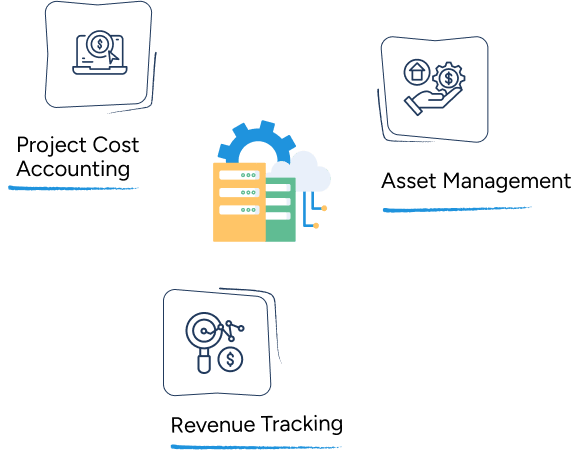
01. Project Cost Tracking and Allocation
The power and infrastructure industry often undertakes large-scale projects that require careful or accurate cost tracking and allocation. Proper accounting practices involve creating detailed budgets, estimating costs accurately, and tracking expenses throughout the project lifecycle. Given the scope and duration of these projects, cost overruns can have a substantial impact. Maintaining accurate records of expenditures, labor costs, materials, and equipment expenses is crucial for assessing project profitability and making informed financial decisions.
02. Revenue Recognition
Revenue recognition in the power and infrastructure sector is often complex due to the long-term nature of contracts and projects. It’s crucial to follow the Australian Accounting Standards to determine when revenue can be recognized.
03. Depreciation and Asset Management
The power and infrastructure industry heavily relies on various assets, such as power plants, transmission lines, and equipment, which have long life cycles. Properly managing and depreciating these assets is essential for accurate financial reporting.
04. Regulatory Compliance and Reporting
The power and infrastructure industry is subject to stringent regulatory frameworks and reporting requirements. Companies must adhere to industry-specific regulations, environmental standards, and safety guidelines.
05. Taxation and Incentives
Taxation is a critical aspect of accounting in any industry, and the power and infrastructure sector is no exception. Companies need to navigate complex tax codes, claim eligible deductions, and take advantage of available incentives, such as tax credits for renewable energy projects. Proper tax planning and compliance are essential to optimize the company’s tax position while ensuring adherence to legal requirements.
06. Foreign Currency and International Operations
Many players in the Australian power and infrastructure industry operate internationally, either through partnerships, joint ventures, or direct investments. Dealing with foreign currencies and managing exchange rate fluctuations can significantly impact financial performance. Proper bookkeeping should include mechanisms to accurately convert and record transactions in different currencies, as well as manage potential currency risks.
07. Financial Risk Management
The power and infrastructure industry involves substantial financial risks, including market price volatility, regulatory changes, and project delays. Effective accounting practices should incorporate risk assessment and management strategies.
08. Environmental and Sustainability Reporting
In recent years, environmental and sustainability considerations have gained prominence in the power and infrastructure sector. Companies are under increasing pressure to disclose their environmental impacts and efforts towards sustainability. Effective accounting should incorporate mechanisms to track and report on carbon emissions, energy efficiency initiatives, and compliance with environmental regulations.
09. Technology Integration
Modern accounting and bookkeeping practices in the power and infrastructure industry involve the integration of technology solutions. Cloud-based accounting software, data analytics tools, and enterprise resource planning (ERP) systems can streamline financial processes, enhance accuracy, and provide real-time insights for decision-making.
10. Audit and Assurance
Given the complexity of the power and infrastructure sector, regular audits play a vital role in maintaining the integrity of financial information. External audits provide an independent assessment of a company’s financial statements and internal controls. Adhering to audit requirements ensures transparency and accountability to stakeholders.
Requirements of Accounting and Bookkeeping in the Power and Infrastructure Industry In Australia
Accounting and bookkeeping in the power and infrastructure industry in Australia, like in any other sector, are essential for maintaining accurate financial records. Here are some key requirements for accounting and bookkeeping in this industry:
- Accrual Accounting
The power and infrastructure industry typically follows accrual accounting, where transactions are recorded when they are incurred, not when the cash is exchanged. This method provides a more accurate representation of the financial health of the business.
- Regulatory Compliance
The industry is subject to various regulations and standards, including those set by the Australian Accounting Standards Board (AASB) and the Australian Securities and Investments Commission (ASIC). Compliance with these standards is crucial for accurate reporting.
- Cost Tracking and Allocation
Given the large-scale projects in this industry, tracking costs accurately is essential. Differentiate between direct and indirect costs and allocate them to specific projects or activities to measure profitability accurately.
- Project Accounting
Many projects in the power and infrastructure industry have long durations and involve multiple phases. Implement project accounting methodologies to track costs, revenues, and progress on individual projects. This helps in assessing project profitability and managing budgets effectively.
- Taxation Requirement
The industry is subject to various tax regulations. Proper tax planning and compliance are essential to manage tax liabilities effectively. Making provisions for taxes is an important part of a business. Each industry has different tax requirements and attracts different taxes. So, for a firm getting sound knowledge of taxation is necessary, but it consumes a lot of time. Understanding this, we at Meru Accounting provide taxation-related information according to both the industry sector as well as the country of location.
- Financial Reporting
Prepare accurate financial statements, including the income statement, balance sheet, and cash flow statement, to provide a clear picture of the company’s financial performance and position.
- Internal Controls
Establish strong internal controls to prevent errors, fraud, and misstatements in financial records. This is especially important given the large-scale nature of the industry’s operations.
- Software and Technology
Utilize specialized accounting and bookkeeping software tailored to the industry’s needs. This can streamline processes, improve accuracy, and facilitate reporting.
- Contract Management
The industry often involves complex contracts. Properly account for contract terms, revenue recognition, and expenses related to contract performance.
- To achieve financial goals
Bookkeeping for Power Industries – Power and infrastructure industries are very large and in a way, the function tends to be extensive. The machinery and inventory being used in the projects are huge in numbers and thus it requires subtle planning. We understand these requirements and Bookkeeping for the Power and Infrastructure Industry thus provide our clients with monthly or quarterly financial analyses and so they can achieve their financial goals.
- Alleviating uncertainty
The Energy Industry and the Infrastructure industry, both are major players in a country’s development and that’s why taxation, policies, etc. tend to change as per Governments’ decisions. Besides that, these industries also attract uncertainties related to prices of raw materials, government norms, and political and economic pressure. True that we cannot avoid these uncertainties, but definitely can be reduced to a level. Our team of professional experts prepares accurate financial analysis that can help your firm survive in future uncertainties.
- Future Projections
Through our accurate accounting management services, our clients get an overview of performing their business; from payments to receivables, we consider all of them. A good overview, of course, helps our clients to make future projections for their firm’s performance and financial viability.
Conclusion
In Australia’s power and infrastructure industry, accounting and bookkeeping are more than just administrative tasks. They are crucial for financial stability and operational efficiency. Every industry has its unique needs, so it is important to use advanced methods for managing money, reducing risks, and following rules. In the complex world of power and infrastructure, where amazing engineering meets money matters, being good at handling money is important. Meru Accounting is specialized in managing finances for the power and infrastructure industry in Australia. We’re experts at keeping track of money and making sure it’s all organized. We make sure the money part not only makes sense but also helps the whole industry grow in a good way. Leave the financial management on Meru Accounting and spend more time on developing your business more and more.
Hiring Virtual Accountant With Meru Accounting
- Meru Accounting provides world-class services that cater to all the needs of cloud accounting and bookkeeping of your business.
- We work on the best accounting software like Xero and Quickbooks, as well as add-ons that will make sure all your work is up-to-date.
- Help you with switching from your traditional software to Xero and Quickbooks.
- We also manage VAT, BAS, Sales Tax and Indirect taxes for you so you are always ready at the end of the financial year.
When you choose to outsource your accounting work with us, it benefits you in the following ways:
- Cost-saving
- Access to skilled and experienced professionals
- Better management of books of accounts
- Decreased chances of errors
- Improve business efficiency
- De-burdens in-office employee’s dependency
- Better turnaround time
- We work on virtual technologies like Team Viewer, Virtual Private Network (VPN) to share and access data from your system.
- You have to share your accounting software login details.
- Through that, we complete all of your work and update it on the cloud, so you can have access to your data from anywhere and at any time.
- Software is not a barrier for us. Due to our strong and professional accounting knowledge, we can prepare your books in almost any of the accounting software.
We provide our bookkeeping services at the rate of US $10 per hour. So, you only need to pay for the amount of time actual work is done.
We take certain preventive measures to secure your data, like:
- Cyberoam Firewall to prevent any kind of foreign threat.
- Dual-step authentication
- Implement anti-virus
- Limit user access so that login details are with a few people.
- Meru Accounting work on some of the best accounting software’s like:
- Xero
- Quickbooks
- Netsuite
- Saasu
- Wave
- Odoo
- Along with that, we also work with many add-ons like Workflow Max, Receipt Bank, Slack, TradeGecko etc., to extend your software’s capacity and improved work experience.
To book for trial, call us on our numbers or Please fill out the form here.
Our Work Information
- We have combined team of Professionals. Seniors are generally Certified Chartered Accountants. Junior Bookkeepers are having Qualifications like Bachelors of Commerce, Masters of Commerce, Masters in Business Administration in the subject of Accounts and Finance, Intermediate level Qualification of Chartered Accountancy, etc.
- For information visit our work methodology page.
We prepare a checklist of information required for bookkeeping and send you at timely intervals so as to ensure that we can do bookkeeping faster.
- We can provide to you once we move ahead in our interview.
- We serve clients on MYOB and have expertise working in Essentials, Account Rights Plus, etc.
Yes, We are presently processing Payroll for Number of clients in US , UK and Australia and take care of complete payroll activities.
Goods and Service tax (GST) is levied on sales of all the goods and services in Australia. GST is generally chargeable at 10% of value of sales.
- Business Activity Statement is a predefined form to be submitted to the Australian Tax office by all the business persons in order to report on their all the tax obligations during the period covered.
- BAS is generally required to be filed quarterly by various businesses.
Individual Business Owners
- Yes, Owner of the business can prepare sign and lodge the tax return on his own. Its not mandatory that the Tax return needs to be signed by an EA or CPA.
- No , its not mandatory that it should be prepared by only CPA or EA. It can be prepared by anyone who has PTIN.
We have Enrolled Agent who has the Authority to sign the documents for our clients after completing the through professional check.
Meru Accounting has its operational centre in India and hence the prices are quite less as compared to US based CPA’s and Enrolled Agents.
Meru Accounting has a team of Tax experts. Each Tax expert prepares around 300-400 Tax returns every year for various CPA’s in United States and Individual Businesses like yours. Due to this vast Experience and Robust Quality Check processes in place we can ensure you about correct Tax planning for your firm.